
Planning a concrete project without knowing the cost first? That’s how people end up spending way more than they expected. A good concrete cost calculator saves you from that headache. Just enter your numbers, and in seconds you’ll know how much concrete you need, and what it’ll cost. Let’s walk through everything.
A concrete cost calculator is a free online tool. You type in your project’s size, like length, width, and thickness, and it tells you how much concrete you need and what it’ll cost.
It’s like having a math helper right on your screen. No guessing. No wasted money.
I’ll be honest, I once skipped this step on a small patio job. I just “eyeballed” it. I ended up buying too much bagged concrete, and half of it sat in my garage for months.
Using a concrete calculator first means you only buy what you need. That saves you real money.
Pretty much anyone pouring concrete can use this. Homeowners fixing a driveway. Weekend DIYers building a patio. Small contractors quoting a job. The tool works for all of them.
Planning a concrete project without knowing the cost first? That’s how people end up spending way more than they expected. A good concrete cost calculator saves you from that headache. Just enter your numbers, and in seconds you’ll know how much concrete you need, and what it’ll cost. Let’s walk through everything.
A concrete cost calculator is a free online tool. You type in your project’s size, like length, width, and thickness, and it tells you how much concrete you need and what it’ll cost.
It’s like having a math helper right on your screen. No guessing. No wasted money.
I’ll be honest, I once skipped this step on a small patio job. I just “eyeballed” it. I ended up buying too much bagged concrete, and half of it sat in my garage for months.
Using a concrete calculator first means you only buy what you need. That saves you real money.
Pretty much anyone pouring concrete can use this. Homeowners fixing a driveway. Weekend DIYers building a patio. Small contractors quoting a job. The tool works for all of them.
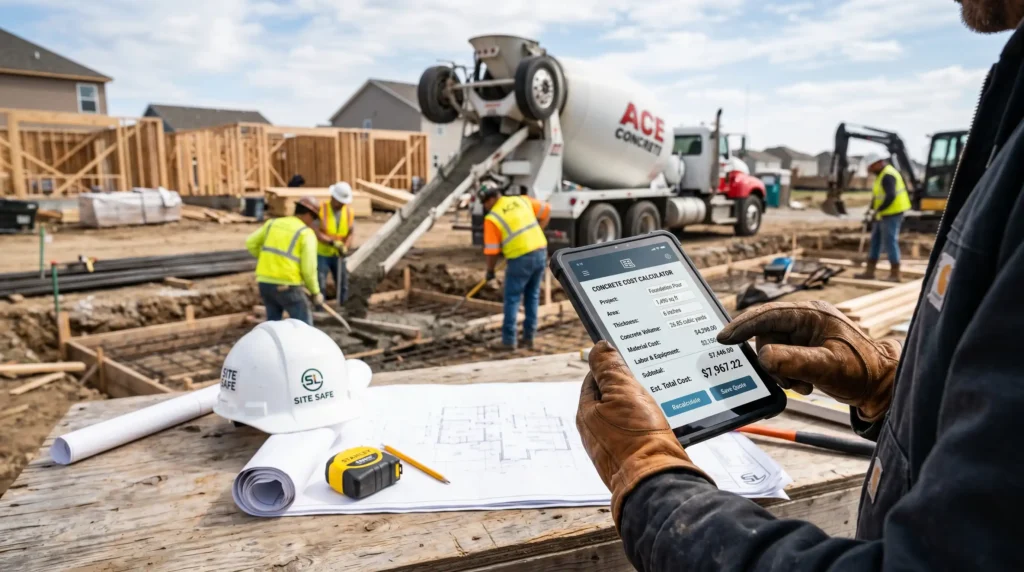
Using the calculator is easy. You don’t need any special skills. Just follow these steps.
| 1 | Project Dimensions Enter the Length, Width, and Thickness of your pour. You can freely mix units (feet, inches, yards, meters, or cm) for each field. |
| 2 | Site Preparation (Optional) Input the area of Old Pavement Removal or the depth of Stone Base (Gravel) needed to calculate the total tons of base material required. |
| 3 | Set Waste Buffer Use the dropdown to select a waste percentage. 5% is recommended for standard jobs, while 10-15% is best for complex or uneven pours. |
| 4 | Enter Project Costs Input the Price per Yard, Delivery Fee, and Labor Allowance to see a full financial breakdown of your project. |
| 5 | Toggle Contractor Mode For professional bids, switch on Contractor Quote Mode to add specific percentages for Overhead and Profit Markup. |
| 6 | Click Calculate Results appear instantly, showing total Cubic Yards, the number of 80-lb/60-lb bags needed, and a complete cost estimate. |
| 7 | Save or Share Use the Save PDF button to generate a formal report, or click Copy Data to quickly grab a text summary for your records. |
This is what most people really want to know. And honestly, the prices can surprise you — especially if you’ve never bought concrete before. Prices for materials and labor change every year, so here is the updated look for 2026.
For larger jobs, concrete is priced by the cubic yard. Right now in 2026, you can expect to pay between $125 and $195 per cubic yard, depending on your location and how strong the mix is.
For smaller projects, people usually think in square feet. A basic concrete slab usually costs between $7 and $17 per square foot. This price usually includes the concrete, the gravel base, and the labor to pour it. Since prices vary a lot by region, it is a smart move to use a calculator to get a specific estimate for your area.
According to the Portland Cement Association, concrete prices vary quite a bit by region, so always check with your local supplier for the most accurate quote.
This depends on your project size.
Bagged Concrete: For small jobs — like a single post hole or a tiny step — bagged concrete works fine. An 80-pound bag usually costs between $6 and $10 at a home improvement store.
Ready-Mix Truck: For bigger jobs like driveways or foundations, ordering ready-mix concrete from a truck is much cheaper per yard. A standard truck holds 9 to 11 cubic yards.
If your project needs more than what one truck carries, you will need to pay for two. Our calculator can help you decide which path is cheaper by showing you exactly how many bags or how many yards your project requires.
When you get a quote, the “price per yard” isn’t the only cost. Most suppliers also charge:
Delivery Fees: A flat fee for the truck to drive to your site.
Small Load Fees: If you order less than a full truck (usually less than 4 or 5 yards), they may charge extra.
Pump Fees: If the truck can’t get close enough to the pour site, you’ll need a pump truck to move the concrete.
Knowing these numbers ahead of time helps you avoid “sticker shock” when the bill arrives. Use a calculator to plug in these local fees so you know your total project cost before you start.
The price you see isn’t always the price you pay. Several factors can push your total cost up or down, from how strong the mix is to how far the truck has to drive.
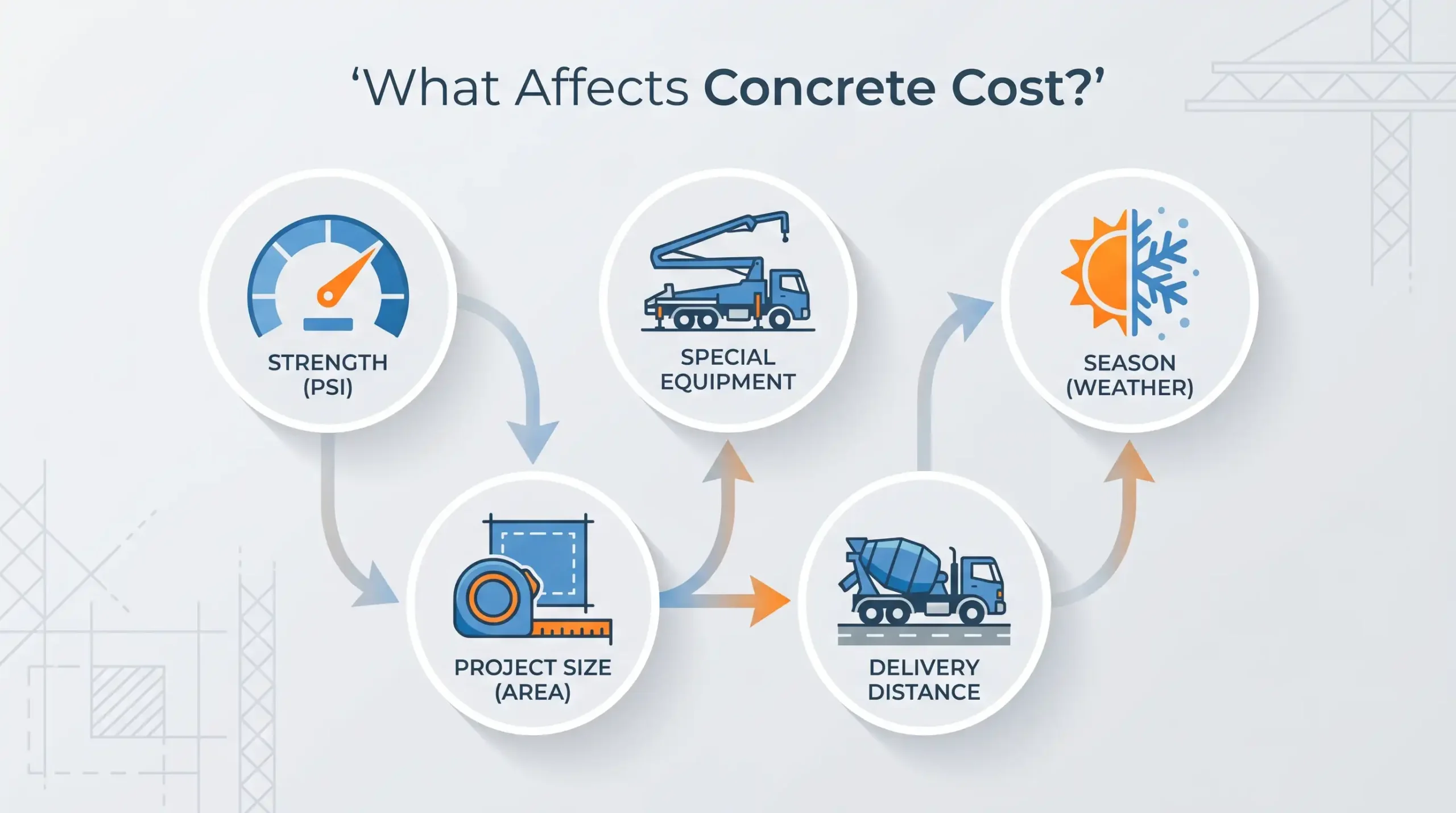
Stronger PSI (pounds per square inch) concrete costs more to make, so it costs more to buy. While a big project might get you bulk pricing, lowering the cost per yard, delivery fees can eat up those savings if you are far from the supplier. For example, a great deal of ready-mix can quickly disappear once you add a delivery charge for living 40 miles from the plant. Always ask about delivery and pump fees before you commit.
Concrete prices usually go up in the spring and summer when everyone is building. If you can schedule your pour in the fall or early winter, you might save 10–15% just through seasonal pricing. Local market rates matter too; prices in high-demand areas like New York will be much higher than in Texas. It is always best to get two or three quotes from local suppliers.
| Factor | Typical Cost Impact | Why it Changes |
| PSI Strength | +$5 to +$20 per yard | Higher strength (4000+ PSI) requires more cement. |
| Delivery Fee | $50 to $150+ | Depends on your distance from the concrete plant. |
| Small Load Fee | $100 to $200 | Charged if you order less than a full truck (under 5 yards). |
| Seasonal Rate | 10% to 15% | Prices peak in Summer and drop in late Fall/Winter. |
| Pump Truck | $500 to $900 | Needed if the truck can’t reach the pour site directly. |
Smart Tips to Lower Your Concrete Project Cost
You don’t have to pay full price. A few smart moves can cut your costs without cutting quality.
The more concrete you order, the less you pay per yard. That’s called volume discount pricing. Always compare at least two or three local suppliers before placing your order.
I learned this the hard way on my first patio project. I called just one supplier, accepted their quote, and moved on. A neighbor later told me the supplier two miles away was charging 15% less for the same mix. That one phone call I skipped cost me real money. Now I always get at least three quotes before committing.
Also, ask if they have leftover ready-mix from another job. Sometimes suppliers sell it at a discount just to avoid waste. I’ve picked up surplus mix at nearly half price just by asking that one simple question at the counter.
Summer is the busiest time for concrete work. Prices are higher, and crews are booked out. If your project isn’t urgent, plan it for late fall.
I scheduled a driveway replacement in October, and the contractor was so relieved to fill the slow season that he threw in the finishing work at no extra charge. The price per yard was lower, the crew showed up on time, and honestly, the cooler temps made for a cleaner cure with zero cracking. Timing alone saved me close to $400 on that job.
You’ll likely pay less, get more attention from your contractor, and have better curing conditions in cooler temps.
A concrete cost calculator is one of the smartest tools you can use before starting any project. It helps you know your volume, pick the right concrete type, and stay on budget. Whether you’re pouring a small patio, a big driveway, or a foundation, always calculate first, buy second.
Have you tried using a concrete calculator for your project? I’d love to hear how it worked for you.
On average, concrete costs between $125 and $195 per cubic yard in 2026. Prices depend heavily on your location, the PSI strength of the mix, and your specific supplier.
Use the basic volume formula: Length × Width × Thickness = cubic feet. Divide by 27 to get cubic yards. A standard 80-pound bag yields about 0.60 cubic feet of wet concrete.
Most residential driveways need 3000 to 4000 PSI concrete. Higher PSI provides the necessary strength to support heavy vehicles without cracking.
For small jobs, bagged concrete is easier and more affordable. For large jobs like driveways or slabs, ready-mix delivered by a truck is significantly cheaper per cubic yard.
For most home projects, like patios, walkways, and standard driveways, 4 inches is the standard thickness. Garage floors and heavy-load areas usually require 5 to 6 inches of depth.