
We often rely on the scale to tell us everything about our bodies, but it only shows a number—and that number can be misleading. A body fat calculator gives a clearer picture of what’s really going on inside your body.
Body fat is a natural and important part of you. It stores energy, protects your organs, and keeps you warm. What truly matters is your body fat percentage, which shows how much of your body is fat versus muscle. This helps you understand your health beyond weight alone.
Because muscle weighs more than fat, two people can weigh the same but look very different. That’s why progress doesn’t always show on the scale. A body fat calculator helps you track real changes, stay motivated, and see your body in a kinder, more informed way, reminding you that you may be doing better than you think.
How to Use Our Body Fat Calculator
Step 1: Choose Your Measurement System
- Select from three options at the top of the calculator:
- Imperial (inches, pounds) – Uses U.S. Navy Method
- Metric (centimeters, kilograms) – Uses U.S. Navy Method
- Other Methods – Provides access to additional calculation techniques
Step 2: Enter Your Basic Information
- Gender: Select male or female
- Age: Enter your age in years (18-100) if you’re not sure, try our Chronological Age Calculator.
Step 3: Enter Your Body Measurements
For the default U.S. Navy Method:
If using Imperial units:
- Height: Enter feet and inches
- Weight: Enter weight in pounds
- Neck Circumference: Enter feet and inches (measure below Adam’s apple)
- Waist Circumference: Enter feet and inches (men: at navel; women: at narrowest point)
- Hip Circumference: Women only – enter feet and inches (measure at widest point)
If using Metric units:
- Height: Enter in centimeters
- Weight: Enter in kilograms (or pounds – calculator will convert automatically)
- Neck Circumference: Enter in centimeters
- Waist Circumference: Enter in centimeters
- Hip Circumference: Women only – enter in centimeters
Step 4: For Advanced Methods (if selected)
Different fields will appear based on your chosen method:
- BMI Method: No additional measurements needed
- Skinfold Methods: Enter measurements from skinfold calipers at various body sites
- Manual Entry: Enter a body fat percentage you already know from another source
Step 5: Calculate Your Results
- Click the “Calculate Body Fat %” button
- View your results in the right panel
Step 6: Interpret Your Results
Our calculator will display:
- Your body fat percentage
- A visual representation on a progress bar
- Your body fat category (Underfat, Healthy, Overfat, or Obese)
- Your fat mass and lean mass
- Reference tables showing healthy ranges
- Health insights based on your results
Measurement Tips:
- Take all measurements in thin clothing or against bare skin
- For an accurate neck measurement, position the tape just below the larynx
- For the waist, men should measure at the navel level; women at the narrowest part
- For hips, measure at the widest point around the buttocks
- Keep the measuring tape snug but not compressing the skin
- Take measurements before eating or exercising for consistency
For the most accurate results, consider taking each measurement 2-3 times and using the average.
Most Accurate Methods for Measuring Body Fat
U.S. Navy Method
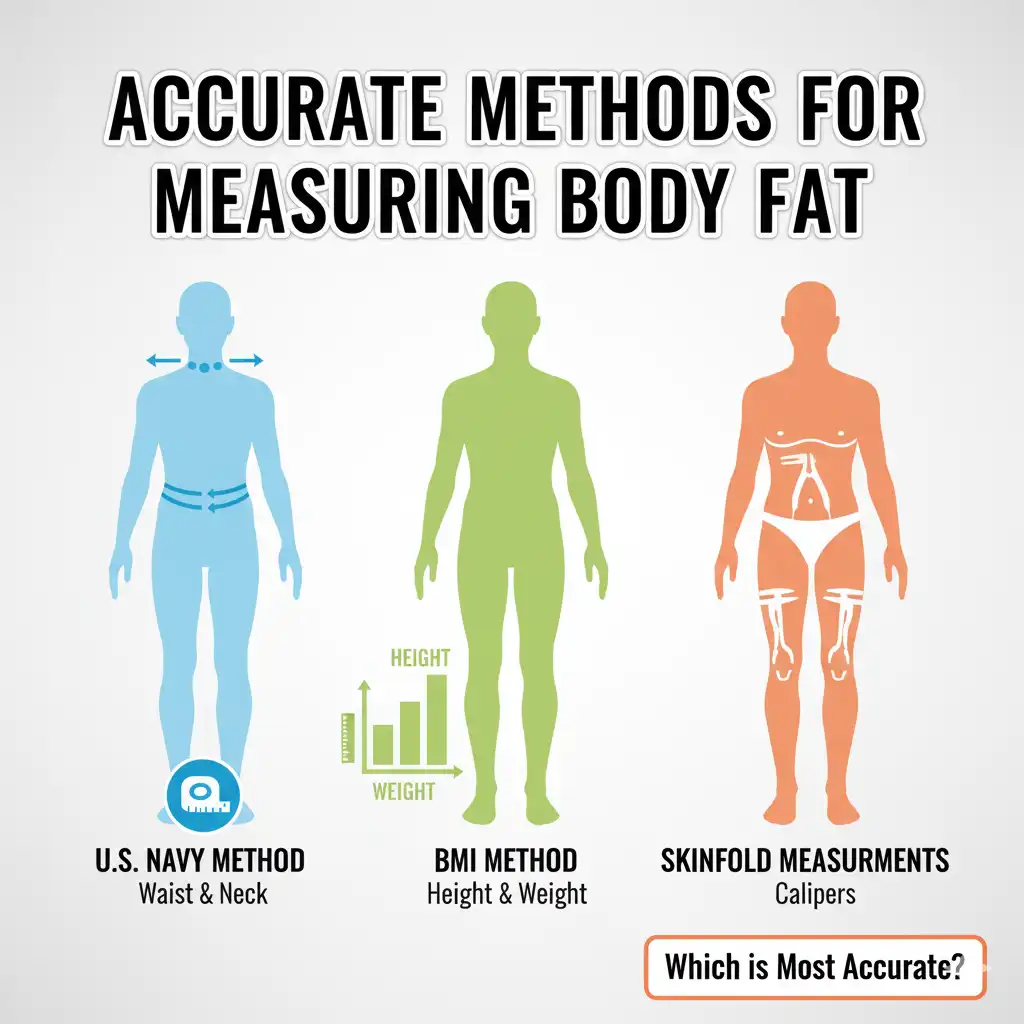
The U.S. Navy Method calculates body fat percentage using simple circumference measurements at standardized body locations. For men, it requires neck and waist measurements, while women need neck, waist, and hip measurements. These values, along with height, are entered into gender-specific logarithmic formulas that estimate body fat percentage with reasonable accuracy.
I’ve been using the Navy Method for the past two years to track my body composition changes, and it’s been surprisingly reliable. When I compared it with a professional DEXA scan during a fitness assessment, my Navy Method calculation was within 2.1% of the clinical measurement.
What I appreciate most is how accessible it makes tracking. I keep a measuring tape in my bathroom drawer and take consistent measurements on Sunday mornings. This simple routine has helped me stay accountable during both muscle-building and fat loss phases.
The key to accuracy, I’ve found, is being meticulous about measurement placement. I actually marked the exact spots with a skin-safe marker the first few times until I was confident I was measuring the same locations consistently.
BMI Method
The Body Mass Index (BMI) method provides a rough estimate of body fat based on weight and height. While it’s the simplest approach, it’s also the least accurate as it doesn’t distinguish between muscle and fat mass. The formula calculates body fat using the relationship between BMI, age, and gender.
Athletes and muscular individuals often receive inaccurately high body fat estimates with this method, as muscle weighs more than fat. The BMI method is best used as a general population screening tool rather than for individual body composition assessment.
Skinfold Measurements
Skinfold measurements involve using calipers to measure the thickness of fat layers at specific sites on the body. Various protocols exist, including the Jackson-Pollock 3-site, 4-site, and 7-site methods, as well as the Durnin-Womersley method. When performed correctly by a trained technician, these methods provide accuracy within ±3-4% of laboratory techniques.
The accuracy improves with more measurement sites, with 7-site protocols being the most reliable. Skinfold measurements are widely used in fitness settings but require proper technique and quality calipers to achieve consistent results.
Advanced Measurement Techniques
The most accurate body fat measurement methods are typically available only in clinical, research, or specialized fitness settings:
- DEXA (Dual-Energy X-ray Absorptiometry): Considered the gold standard, DEXA scans use low-dose X-rays to distinguish between bone, lean tissue, and fat with accuracy within ±1-2%. This method provides detailed regional fat distribution information.
- Bod Pod (Air Displacement Plethysmography): This egg-shaped chamber measures body volume and density through air displacement, offering accuracy comparable to hydrostatic weighing but with greater convenience. Accuracy is typically within ±2-3%.
- Hydrostatic Weighing: Also known as underwater weighing, this technique determines body density by measuring weight both in and out of water. Based on Archimedes’ principle, it has long been considered a reference method with accuracy within ±2-3%.
While these advanced techniques provide superior accuracy, they require specialized equipment, trained technicians, and are typically more expensive than other methods.
Why Body Fat Percentage Matters More Than Weight
Body fat percentage shows what your weight is really made of: muscle, bone, water, and fat. I learned this myself when a friend and I weighed almost the same, but his body fat was much lower, and you could clearly see the difference in energy and fitness levels.
Unlike the scale, body fat percentage reveals hidden risks like visceral fat around your organs that can lead to heart disease and metabolic problems. Pairing this with tools like our Treadmill Calorie Calculator helps you track how consistent activity can reduce these risks. I remember when I first tracked mine, I hadn’t lost much weight, but my fat percentage dropped, and I felt fitter and healthier.
It’s also a fairer measure because it accounts for body type and frame size. That’s why focusing on body fat percentage is far more motivating than just relying on the scale. You can use our body fat calculator to see your own numbers and track real progress.
Healthy Body Fat Percentage Ranges
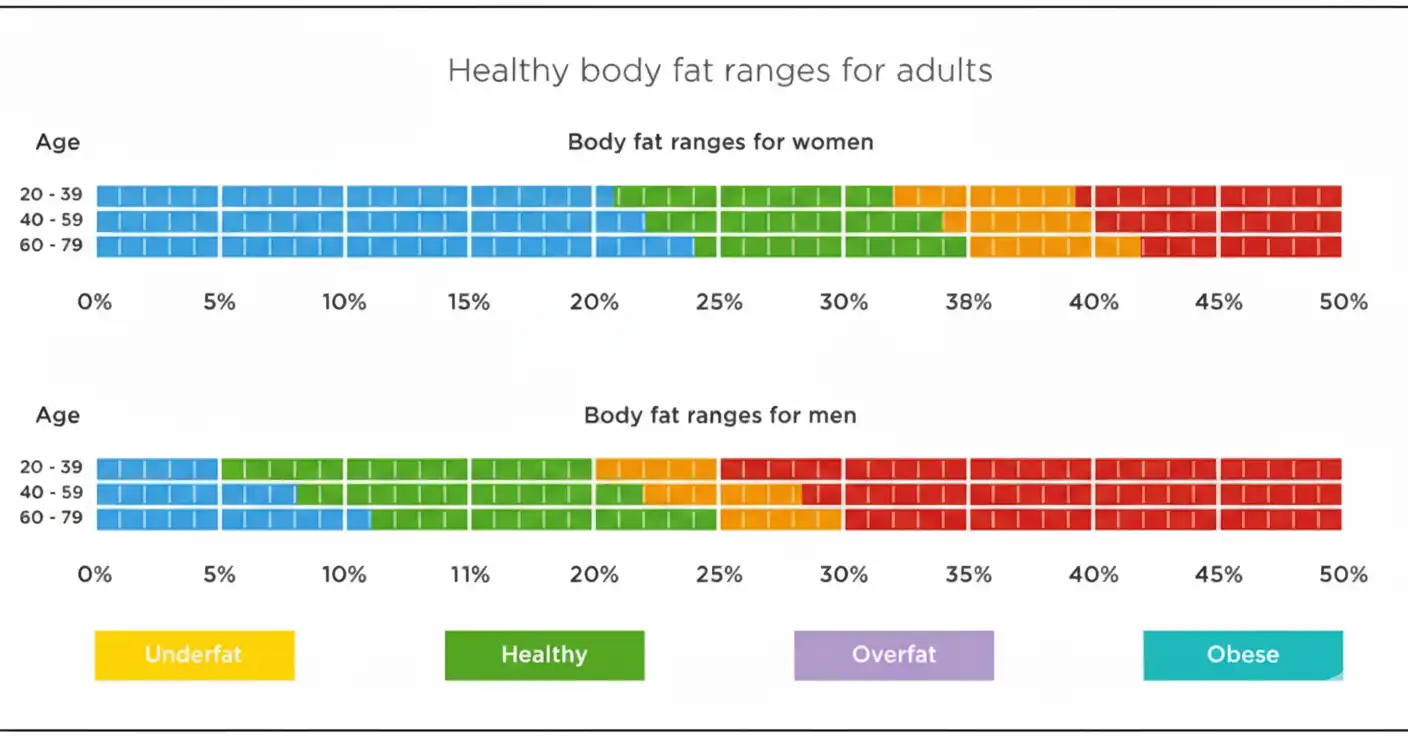
The table below outlines the standard body fat percentage categories established by the American Council on Exercise (ACE). These ranges provide reference points for understanding body composition based on gender and activity level, helping you identify where you fall on the spectrum and set appropriate health goals.
| Category | Women | Men | Description |
| Essential Fat | 10-13% | 2-5% | Minimum needed for basic physiological functions |
| Athletes | 14-20% | 6-13% | Typical for competitive sports performance |
| Fitness | 21-24% | 14-17% | Regular exercisers with healthy habits |
| Average / Acceptable | 25-31% | 18-24% | Typical range in general population |
| Obese | ≥ 32% | ≥ 25% | Increased health risk category |
Note: This table provides generic estimates and guidelines. Consult your physician for guidelines that fit you.
Why Should I Control My Body Fat?
Maintaining healthy body fat levels is crucial for overall well-being beyond just physical appearance. Excess body fat, particularly visceral fat around vital organs, significantly increases risks for serious health conditions, including cardiovascular disease, type 2 diabetes, stroke, and certain cancers, while also affecting hormone production, metabolism, and joint health.
Key health benefits of maintaining healthy body fat include:
- Reduced risk of cardiovascular disease and improved heart function
- Better insulin sensitivity and lower risk of type 2 diabetes
- Decreased inflammation throughout the body
- Improved hormone regulation and metabolic function
- Reduced strain on joints and improved mobility
- Better sleep quality and higher energy levels
- Enhanced immune system function
- Potential for longer lifespan and healthier aging
As someone who struggled with higher body fat for years, I experienced firsthand how reducing my body fat percentage improved my energy levels, sleep quality, and confidence. I found that approaching body fat management through sustainable lifestyle changes, rather than extreme diets, was key to maintaining long-term success and better health markers.
The Dangers of Too Little Body Fat
Extremely low body fat percentages can be just as dangerous as having too much body fat. When body fat drops below essential levels (10-13% for women, 2-5% for men), serious health consequences can occur. The body requires adequate fat for hormone production, organ protection, immune function, and temperature regulation.
Insufficient body fat can lead to:
- Hormonal disruption causes menstrual irregularities in women and decreased testosterone in men
- A compromized immune system makes you more susceptible to illness
- Decreased bone density increasing fracture risk
- Significant energy depletion and chronic fatigue
- Impaired cognitive function and mood disorders
- Nutrient deficiencies despite adequate caloric intake
- Cardiovascular issues, including abnormal heart rhythms
- Difficulty maintaining body temperature, especially in cold environments
Athletes pursuing extremely low body fat should work with healthcare professionals to monitor health markers. Remember that sustainable performance comes from maintaining healthy body composition rather than achieving the lowest possible body fat percentage.
How to Reduce Body Fat Percentage
Step 1: Create a Sustainable Calorie Deficit
Create a moderate calorie deficit of 300-500 calories per day through a combination of diet and exercise. Research published in the Journal of the International Society of Sports Nutrition indicates this moderate approach prevents metabolic slowdown while promoting fat loss at a sustainable rate of 0.5-1% of body weight weekly (Helms et al., 2014).
Step 2: Prioritize Protein Intake
Consume 1.6-2.2g of protein per kg of body weight daily, distributed across meals. A meta-analysis in the British Journal of Sports Medicine found this range optimal for preserving muscle mass during fat loss phases (Murphy et al., 2015).
Step 3: Structure Your Exercise Routine
Implement both strength training and cardiovascular exercise:
- Resistance training: 2-3 sessions weekly, focusing on compound movements
- HIIT workouts: 20-30 minutes, 2-3 times weekly
- Moderate-intensity cardio: 30-60 minutes, 2-3 times weekly
The American College of Sports Medicine (Donnelly et al., 2009) recommends combining moderate-to-vigorous physical activity (including both aerobic and resistance exercise) with dietary energy restriction to maximize fat loss while preserving lean mass, thereby optimizing changes in body composition
Step 4: Focus on Whole Foods
Base your diet on nutrient-dense foods:
- Lean proteins (chicken, fish, legumes, tofu)
- Vegetables and fruits (aim for a variety of colors)
- Complex carbohydrates (whole grains, sweet potatoes)
- Healthy fats (avocados, nuts, olive oil)
Harvard School of Public Health research supports this dietary pattern for sustainable fat loss and overall health (Mozaffarian et al., 2011).
Step 5: Manage Recovery and Stress
Ensure adequate sleep (7-9 hours) and manage stress levels. According to research in the Annals of Internal Medicine, insufficient sleep can reduce the proportion of weight lost from fat by 55% and increase the loss of fat-free mass (Nedeltcheva et al., 2010).
Step 6: Track Progress Beyond the Scale
Measure progress using multiple metrics: body measurements, progress photos, strength gains, and energy levels—not just weight. The International Journal of Obesity recommends this multifaceted approach to tracking body composition changes (Ross et al., 2020).
Step 7: Adjust Based on Results
Reassess every 2-3 weeks and make small adjustments to nutrition or exercise as needed. Research in the Journal of Obesity indicates periodic reassessment prevents plateaus during fat loss phases (Hall et al., 2012).
Why We Built This Calculator at Intercalculator
At Intercalculator, we noticed that most people only rely on the bathroom scale, which often tells just half the story. Weight alone doesn’t explain whether you’re losing fat, gaining muscle, or improving your health. That’s why we built this calculator, to give you a clearer, more accurate picture of your body composition.
We designed it to be simple, free, and accessible for anyone, whether you’re just starting your fitness journey or you’re already tracking progress. Personally, I’ve found that having an easy tool like this takes the guesswork out of my routine. Instead of stressing over daily weight changes, I can see the real improvements happening inside my body.
Our goal is to help you focus on what really matters: building healthier habits, staying consistent, and measuring progress in a way that motivates you, not discourages you.
Final Thoughts
Understanding and monitoring your body fat percentage provides valuable insights that weight alone cannot offer. It helps you make informed decisions about your health, fitness goals, and lifestyle changes while accounting for your unique body composition.
I’ve found that tracking my body fat percentage rather than just weight has completely transformed my approach to fitness, removing the frustration of scale plateaus and helping me appreciate the meaningful changes happening in my body. Remember that healthy body composition is about finding a sustainable balance that supports your overall wellbeing, not reaching an arbitrary number or aesthetic ideal.
Frequently Asked Questions
Can I use this calculator for weight loss or fitness tracking?
Yes! Regularly checking your body fat percentage helps track fat loss instead of just weight loss. For best results, take measurements under the same conditions each time (same time of day, similar hydration levels).
Which method should I use: Imperial, Metric, or Other Methods?
- Imperial / Metric U.S. Navy Method: Uses waist, neck, and height for quick estimates.
- BMI Method: Based on height and weight, less accurate for athletes or very muscular people.
- Other Methods (Bailey, Jackson-Pollock, etc.): More detailed, requiring additional circumference or skinfold data, but generally more precise.
How accurate is the body fat calculator?
It gives a useful estimate but isn’t perfectly precise. Best for tracking trends over time, especially when measurements are done consistently. Clinical tests like DEXA are more accurate.
Why is knowing my body fat percentage important?
It shows how much of your body is fat versus muscle, giving a clearer picture of your health beyond just weight.
Can I use this calculator for weight loss or fitness tracking?
Yes! It helps track real progress, set goals, and stay motivated by focusing on body composition, not just the scale.
This calculator was created by the InterCalculator Editorial Team, led by Haris Farooq (Formula & Development). Our team specializes in formula research, calculator logic, and technical development, ensuring each tool is accurate, fast, and easy to use.
View Team →Before publishing, every calculator goes through the InterCalculator Accuracy Review Process. For the Body Fat Calculator, we verify formulas against trusted sources like the U.S. Navy method and test with multiple datasets covering different ages, genders, and measurements. All results are reviewed with an experienced medical professional and dietitian to ensure accuracy, clarity, and reliability.
View Process →